





Air pollution is already linked to respiratory disease, cardiovascular conditions, and thousands of premature deaths each year. Now, growing evidence suggests it also plays a role in the development of dementia.
The issue was recently highlighted by Air Quality News (https://airqualitynews.com/headlines/air-pollution-linked-to-higher-risk-of-two-forms-of-dementia/), which reported on new research linking long-term exposure to air pollution with a significantly increased risk of developing dementia with Lewy bodies and Parkinson’s disease dementia.
The findings add to a growing body of evidence showing that the impacts of air pollution extend far beyond the lungs, reinforcing the importance of reducing emissions wherever possible.

A Growing Public Health Challenge
According to the study featured by Air Quality News (https://airqualitynews.com/headlines/air-pollution-linked-to-higher-risk-of-two-forms-of-dementia/), people exposed to higher concentrations of fine particulate matter (PM2.5) faced almost four times the risk of developing dementia with Lewy bodies compared with those exposed to lower levels.
The research also identified nitrogen dioxide (NO₂), a pollutant commonly associated with fossil fuel combustion, as a significant risk factor.
These findings align with broader research from the University of Cambridge (https://www.cam.ac.uk/research/news/long-term-exposure-to-outdoor-air-pollution-linked-to-increased-risk-of-dementia), which analysed data from almost 30 million people and found that long-term exposure to pollutants such as PM2.5, NO₂, and soot is associated with an increased risk of dementia.
Scientists believe these pollutants can enter the bloodstream and contribute to inflammation, vascular damage, and neurological changes linked to cognitive decline.
According to Alzheimer’s Society (https://www.alzheimers.org.uk/about-dementia/managing-the-risk-of-dementia/reduce-your-risk-of-dementia/air-pollution), exposure to high levels of air pollution increases a person’s likelihood of developing dementia while also contributing to respiratory and cardiovascular disease.
For businesses, the message is becoming increasingly clear. The conversation around emissions is no longer solely about carbon. It’s also about the wider impact that pollution has on human health and quality of life.
The Challenge Facing the Industry
Across construction, infrastructure, events, ports, and industrial operations, diesel generators continue to provide essential power where grid access is unavailable or insufficient.
While reliable, these systems release pollutants, including NOx and particulate matter, directly into the environments where people work and live.
Reducing these emissions has immediate benefits for workforce wellbeing, surrounding communities, and the wider environment.
Many organisations have adopted HVO as a transitional fuel because it can reduce lifecycle carbon emissions compared with fossil diesel. However, those carbon savings exist largely on paper. At the point of use, HVO is still burned in an engine or generator and continues to emit carbon dioxide, nitrogen oxides (NOx), and particulate matter.
As a result, while HVO may support carbon reporting objectives, it does not address the local air quality impacts increasingly linked to respiratory, cardiovascular, and neurological health concerns. For organisations seeking to reduce both carbon emissions and harmful pollutants, technologies that eliminate combustion altogether, such as batteries and hydrogen fuel cells, offer a more effective long-term solution.
The Shift Towards Cleaner Power
One of the most effective ways to reduce local emissions is to remove combustion from the equation altogether.
Battery technologies are already helping organisations transition away from fossil fuels by supporting electric vehicles, plant, and equipment. As a result, many workplaces are seeing reductions in noise, exhaust emissions, and local air pollution.
However, electrification often presents practical challenges. Temporary sites, remote locations, and grid-constrained environments frequently require more energy than batteries alone can economically provide.
This is where hydrogen is playing an increasingly important role.
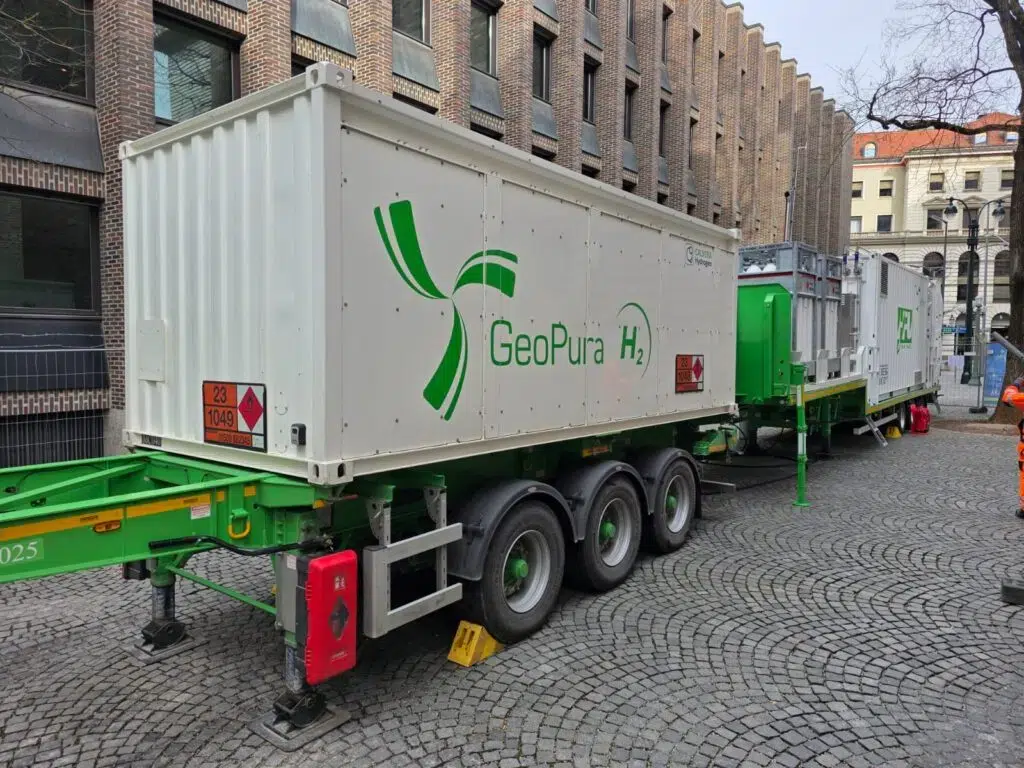
Hydrogen fuel cells generate electricity electrochemically rather than through combustion, producing only water at the point of use. By combining fuel cells with battery technologies, organisations can access reliable power while supporting wider electrification programmes.
Across the UK and Europe, hydrogen power is already supporting electric construction equipment, EV charging infrastructure, major events, live broadcasts, and critical infrastructure projects, helping organisations reduce emissions without compromising operational performance.
Cleaner Energy Delivers Broader Benefits
The benefits of cleaner energy extend well beyond carbon reduction.
Reducing exposure to pollutants such as NOx and particulate matter can contribute to healthier working environments, improved local air quality, and better outcomes for nearby communities.
Research presented at the Alzheimer’s Association International Conference (https://aaic.alz.org/releases_2021/air-pollution-dementia-risk.asp) suggests that reducing exposure to air pollution may help lower dementia risk, adding further weight to efforts to tackle emissions at their source.
As governments, businesses, and investors place greater emphasis on environmental and social impact, the ability to reduce both carbon emissions and harmful pollutants is becoming an increasingly important measure of progress.
The Future of Power is Cleaner
The latest dementia research serves as another reminder that air quality matters.
While there is no single solution to the challenge, technologies that eliminate combustion emissions can play an important role in creating healthier places to live and work.
For industries that rely on temporary, off-grid, and supplementary power, the transition is already underway. Battery technologies, hydrogen fuel cells, and other clean energy solutions are helping organisations reduce emissions, support electrification, and improve air quality today.
GeoPura’s HPUs™are already supporting this transition across construction, infrastructure, events, broadcast, defence and transport applications, providing reliable zero-emission power while helping organisations reduce their environmental impact and improve air quality for workers and local communities.
To learn more about GeoPura’s Hydrogen Power Units™, visit the HPU™ product pages or explore our latest customer case studies.
Share this Post

