





The construction industry is accelerating the shift to next-gen site power to cut diesel from site operations. The Construction Leadership Council’s Zero Diesel Sites Route Map targets a 78% reduction in on-site diesel use by 2035, and contractors are increasingly being asked, by clients, by planners, and by their own net-zero commitments, to demonstrate how they’re going to get there. Hydrogen-powered plant is one of the solutions for heavy-duty, continuous-use applications where battery-electric technology and tethered electric plant may have limitations.
Excavators, cranes, and other heavy plant can run on hydrogen, but making that work on a live site depends on having the right refuelling infrastructure in place. For many site managers, that raises the practical questions: where does the hydrogen come from, how is it delivered into a machine, and does it need permanent infrastructure?
Here’s what hydrogen refuelling for construction plant looks like in practice.
No Permanent Infrastructure Required
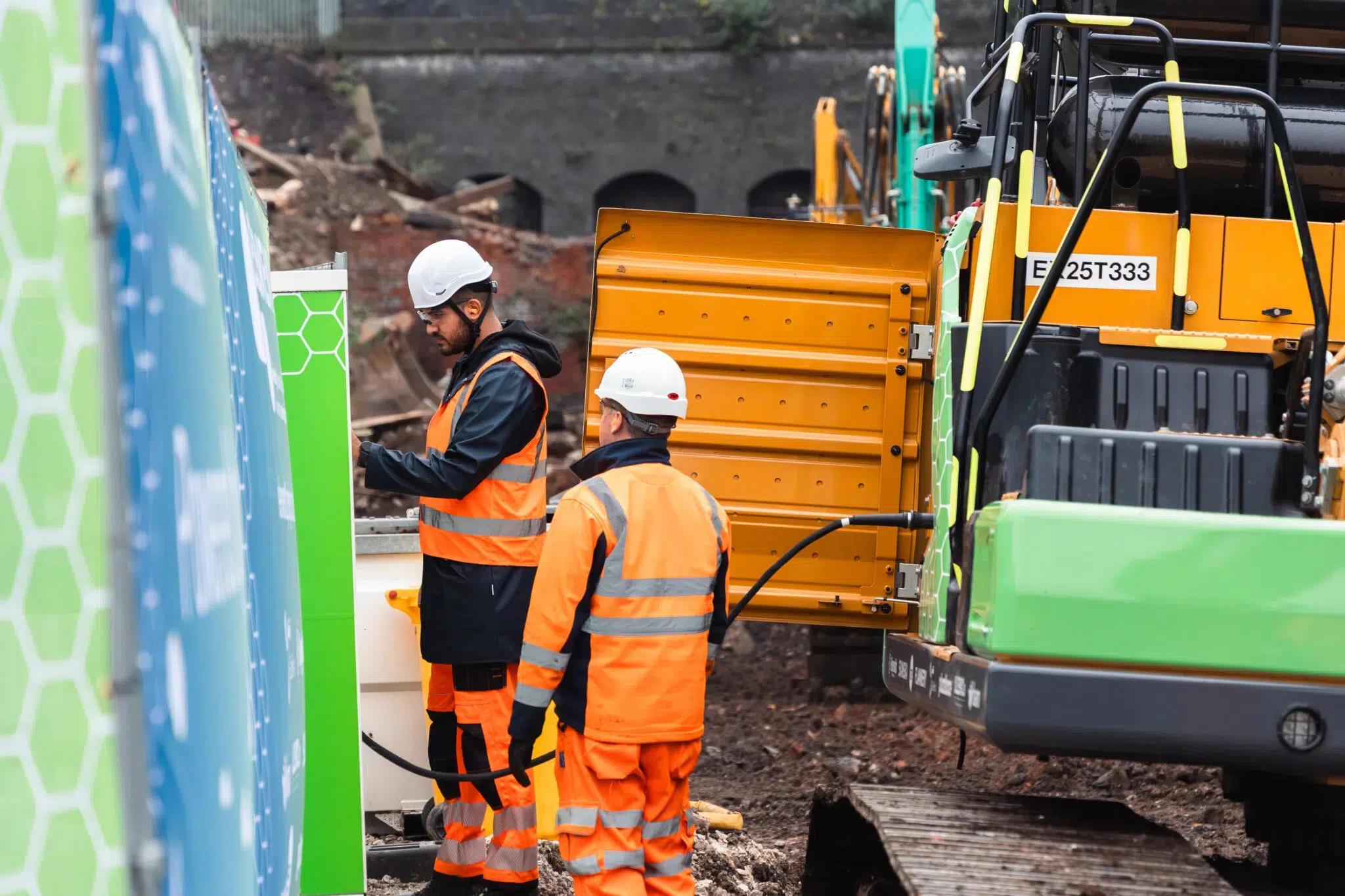
The first thing that tends to surprise site teams is that refuelling plant with hydrogen doesn’t require fixed pipework or a permanent fuelling station. GeoPura’s hydrogen refuelling solutions are hireable and capable of operating off-grid, designed for rapid deployment wherever they’re needed, including remote locations, temporary compounds, and short-term trials, without any permanent installation. That makes it straightforward to trial hydrogen plant on a single project, with the flexibility to scale up the refuelling infrastructure as you move from trial into full deployment.
Matching the Fill to the Machine
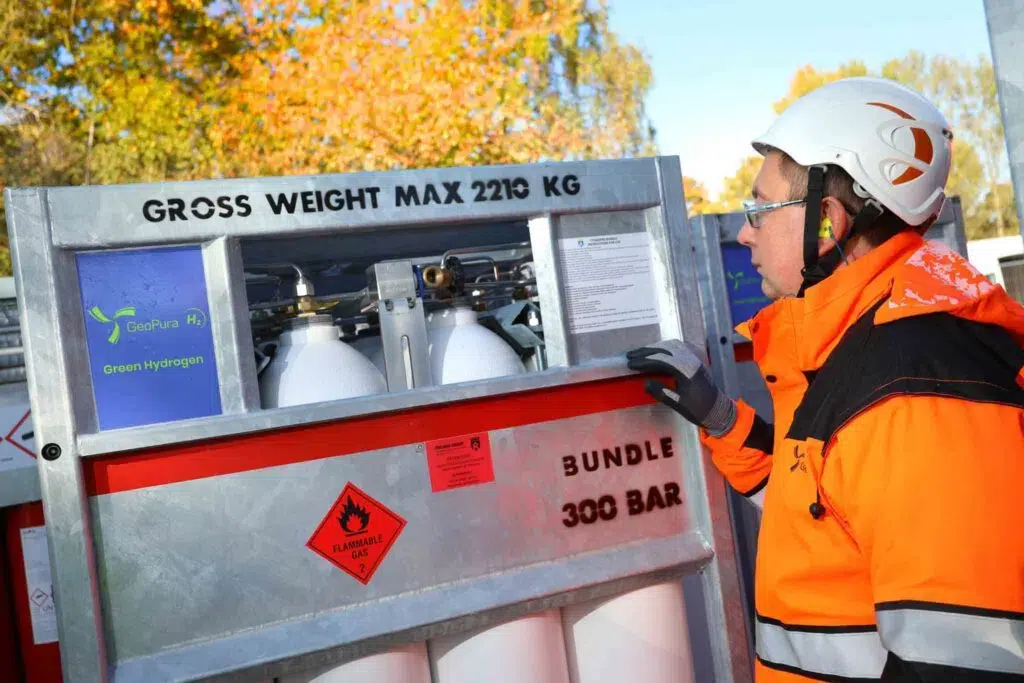
Not all hydrogen refuelling looks the same, and the right setup depends on what’s being fuelled, the scale of the project, and how long it’s running for:
Low Pressure, Low Volume Cascade (LPLVC) – a cost-effective, easy-to-deploy option built for trials and feasibility studies, cascading using a hose and nozzle compatible with standard receptacles.
350bar fill services – the standard for construction plant, HGVs, and industrial vehicles, designed for fast, scalable refuelling to support extended hydrogen-powered operation.
700bar fill services – a higher-pressure option used for some hydrogen fuel cell cars and buses.
How the Hydrogen Gets There
Behind the refuelling point sits a full supply chain. Green hydrogen is produced off site through electrolysis and delivered to site to match how much plant is using it, refilled on a scheduled basis much like a diesel delivery round. GeoPura’s network includes a fleet of over 150 forkliftable hydrogen storage containers and 70 tube trailers, so refuelling equipment on site is backed by a supply chain designed to keep up with continuous plant operation rather than a one-off delivery.
Proven on Real Plant, Not Just in Theory
This isn’t a theoretical capability. On the Element1 project, led by BAM UK & Ireland, GeoPura built an end-to-end hydrogen solution that put four dual-fuel excavators to work on site, refuelled via a hydrogen bowser and by a static refuelling station, alongside a hydrogen generator powering the site office and welfare facilities. The project showed that hydrogen refuelling and hydrogen power generation can run side by side from a single supply, cutting diesel use across both static power and the machines moving earth.
GeoPura has also demonstrated the same refuelling infrastructure in adjacent settings at the Port of Tilbury, supporting live refuelling of hydrogen fuel cell vehicles including Toyota’s Mirai, Hilux prototype, and a fuel cell bus, alongside hydrogen generators charging batteries for electric machinery on the nearby Lower Thames Crossing project. It’s the same underlying refuelling capability, applied across passenger vehicles, HGVs, and construction plant.

Why Hydrogen and Battery-Electric Work Better Together
Battery-electric plant is an increasingly important part of the zero-emission picture on site, and GeoPura’s infrastructure supports that too. Recharging battery-powered equipment is part of the same managed energy service. Hydrogen refuelling sits alongside that, filling the gap for applications where battery-electric plant isn’t yet the right fit: particularly heavier-duty or longer-duration tasks where refuelling time, payload, or the absence of a grid connection make a battery solution harder to deploy. The two technologies are complementary rather than competing. Most sites will end up running both, and having a single provider who can support hydrogen refuelling and battery recharging from the same energy infrastructure makes that transition considerably simpler to manage. As more hydrogen-capable plant comes to market, contractors who have already worked through the logistics of on-site hydrogen refuelling will be well placed to scale up without starting from scratch.
Getting Started
In practice, bringing hydrogen-refuelled plant onto a site comes down to a short sequence: a site survey to assess access and a safe storage location, a tailored proposal matching refuelling capacity (LPLVC, 350bar, or 700bar) to the plant in question, installation of hireable equipment with often with no groundworks required, and a scheduled hydrogen delivery cycle backed by remote fuel monitoring. Projects like Element1 show this can run as a fully integrated system rather than a bolt-on experiment – hydrogen power and hydrogen-fuelled plant operating from the same site, the same supply, and the same delivery schedule.
Curious whether hydrogen refuelling could work for your plant fleet? Get in touch with GeoPura to discuss a tailored proposal.
Share this Post

